
Behind many strong research partnerships is a simple beginning: a meaningful academic conversation. That is one reason how an academic economics conference in Canada supports research collaboration, which matters to scholars, students, and policy thinkers who want stronger feedback, wider networks, and better research opportunities.
In simple terms, these conferences connect economists through presentations, panels, workshops, and follow-up conversations that can become joint studies, publications, and long-term partnerships. Continue reading to know more about how these events turn academic conversations into practical collaboration opportunities.
How an Academic Economics Conference in Canada Supports Research Collaboration?
An academic economics conference in Canada supports research collaboration by connecting economists, researchers, and policy experts through presentations, discussions, and networking. These events help scholars build partnerships, share ideas, and develop joint studies that strengthen academic impact. Explore how these conferences turn connections into collaboration.
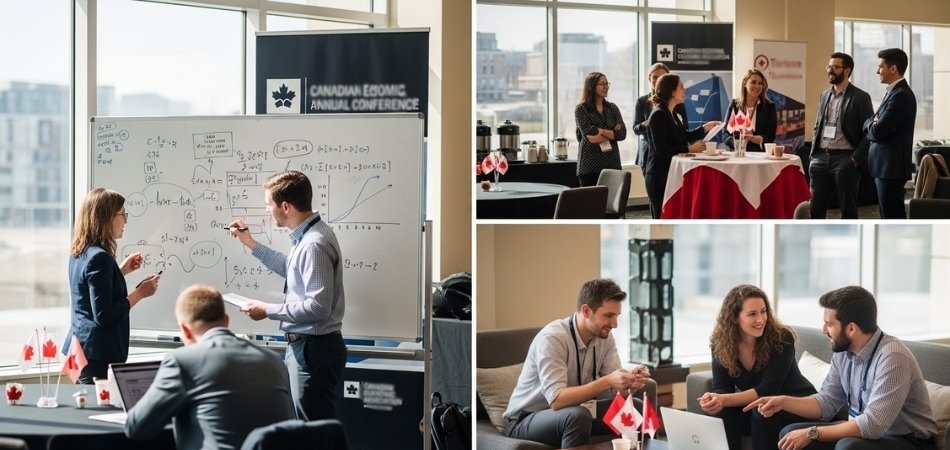
Key Ways Conferences Create Research Collaboration
At an academic economics conference Canada, research collaboration grows through presentations, discussions, and networking that connect scholars, spark ideas, and open paths for joint studies.
Research Presentations
Research presentations allow economists to share findings with a wider scholarly audience. These sessions often attract researchers working on similar issues, which opens the door to meaningful academic conversations.
Research presentations help scholars:
- Receive expert feedback on their work
- Identify researchers with similar interests
- Discover opportunities for co-authored studies
Panel Discussions
Panel discussions bring together experts with different perspectives on economic topics. As researchers respond to each other’s ideas, they often uncover shared questions that can lead to collaborative studies.
Panel discussions support collaboration by helping scholars:
- Compare theories and analytical approaches
- Discuss policy and research trends
- Identify possible research partners
Workshops and Roundtables
Workshops and roundtables provide a more interactive setting than formal presentations. These smaller sessions encourage detailed discussion about methods, datasets, and research design.
They are useful for collaboration because they help researchers:
- Explore research problems in depth
- Exchange methodological insights
- Brainstorm ideas for joint projects
Networking Sessions
Networking sessions give participants a chance to build academic relationships in a less formal setting. Conversations during breaks, receptions, or meetups often become the first step toward future collaboration.
Networking sessions help researchers:
- Introduce their research interests
- Exchange contact information
- Explore long-term academic partnerships
Activities That Often Lead to Collaboration
Researchers often begin collaborative relationships through activities such as:
- Presenting papers and discussing findings with peers
- Participating in panel discussions on economic issues
- Sharing datasets or methodological approaches
- Meeting scholars working on related topics
- Joining interdisciplinary academic conversations
What Makes Collaboration Easier at These Conferences
Academic economics conferences make collaboration easier by creating spaces where scholars interact directly, exchange research insights, and discover shared interests that often lead to joint studies, partnerships, and long-term academic cooperation.
- Direct Academic Interaction: Conferences allow economists to meet face-to-face with scholars working in related research areas. This direct interaction makes it easier to build trust and start productive conversations.
- Exposure to Global Perspectives: Participants often come from different countries and institutions. This diversity introduces fresh research ideas, broader policy perspectives, and new analytical approaches.
- Structured Academic Sessions: Panels, workshops, and themed sessions group researchers around specific economics topics. This structure helps scholars quickly connect with others whose work aligns with their own.
- Opportunities for Follow-Up: Many conference connections continue after the event. Researchers often move from initial discussion to email exchanges, virtual meetings, and shared research planning.
Because of these features, academic economics conferences often become the starting point for meaningful research partnerships that continue well beyond the event itself.
Why Research Collaboration Matters in Economics?
Economic research benefits from collaboration because complex economic issues often require multiple perspectives, broader evidence, and stronger analysis. When economists work together, they can improve research quality, expand academic reach, and produce findings that are more useful for policy, institutions, and future studies.
Key Reasons Collaboration Is Essential in Economic Research
Research collaboration strengthens economic research by combining expertise, expanding evidence, improving methods, and producing findings that are more reliable, relevant, and useful across academic and policy contexts.
Broader Expertise
Collaborative research brings together economists with different strengths, including theory, econometrics, policy analysis, and regional knowledge. This combination improves interpretation, sharpens arguments, and helps produce more balanced and comprehensive economic research outcomes.
Access to Diverse Datasets
Researchers from different institutions often contribute unique datasets, local evidence, or sector-specific information. This broader data access helps economists test ideas more effectively and build studies with stronger depth, accuracy, and comparative value.
Improved Methodological Approaches
Collaboration allows scholars to compare models, statistical methods, and research designs before finalizing a study. This process improves analytical rigor, reduces weaknesses, and helps researchers choose approaches that better match the research objective.
Higher Research Quality
When several researchers review assumptions, methods, findings, and conclusions, the overall study becomes stronger. This shared evaluation improves credibility, reduces blind spots, and increases the academic reliability and practical relevance of economic research.
Benefits of Collaborative Economics Research
Collaboration in economics does more than improve one study. It creates wider academic and practical value that can influence publications, funding opportunities, and policy discussions.
Key benefits include:
- Stronger peer-reviewed publications
- Broader research perspectives
- Higher citation potential
- More opportunities for international research funding
- Stronger influence on economic policy discussions
Because of these advantages, collaboration has become an essential part of modern economic research. In many cases, the first conversations that lead to these outcomes begin in academic settings where economists exchange ideas, compare approaches, and identify shared research interests.
Conference Activities and Their Collaboration Benefits: Quick Chart
Different conference activities support research collaboration in different ways. This quick chart highlights how formal sessions and informal interactions help economists connect, exchange ideas, and develop partnerships that can grow into meaningful academic research collaborations.
| Conference Activity | Collaboration Benefit |
| Research presentations | Help scholars identify others working on similar research topics |
| Panel discussions | Encourage expert idea exchange and reveal shared academic interests |
| Workshops | Create space for collaborative problem solving and method sharing |
| Roundtable sessions | Support focused discussion on specialized economics topics |
| Networking events | Help researchers build direct academic and professional partnerships |
| Poster presentations | Give emerging scholars visibility and opportunities to connect with peers |
This quick chart shows that conferences do more than share knowledge. They create multiple entry points for collaboration, allowing researchers to move from discussion to partnership through structured academic interaction.
Key Conference Activities That Facilitate Research Collaboration
Academic economics conferences support collaboration through a mix of formal sessions and informal interactions. Each activity creates a different opportunity for economists to exchange ideas, receive feedback, and identify partners for future research projects.
Research Presentation Sessions
Research presentation sessions are often the most direct starting point for academic collaboration. When economists present their findings, they invite questions, critiques, and discussion from other scholars who may share similar research interests.
These sessions help researchers:
- Identify scholars working on related topics
- Receive constructive feedback on their work
- Explore possibilities for joint studies or co authored papers
In many cases, collaboration begins when attendees continue the discussion with presenters after the session.
Panel Discussions
Panel discussions bring together multiple experts to examine a specific economic issue from different perspectives. This format encourages broader academic dialogue and helps researchers compare ideas, assumptions, and research priorities.
Panel discussions often provide:
- Exposure to diverse analytical viewpoints
- Identification of overlapping research questions
- Opportunities to connect with speakers and participants
Because panels highlight both agreement and debate, they often inspire new collaborative research directions.
Workshops and Roundtable Discussions
Workshops and roundtable discussions are usually more interactive than standard presentations. They give researchers space to explore methods, debate interpretations, and discuss practical research challenges in greater depth.
These sessions encourage:
- Detailed discussion of research methods
- Collaborative brainstorming around shared problems
- Problem solving related to datasets, models, or theory
Roundtables are particularly useful for researchers looking to build focused partnerships around ongoing or future projects.
Networking Sessions
Networking sessions play a major role in turning academic exposure into real professional connections. Both formal networking events and informal conversations can lead to valuable research relationships.
During these interactions, researchers can:
- Introduce their research interests clearly
- Exchange contact details with relevant scholars
- Discuss ideas for future collaboration
Many long term academic partnerships begin with simple conversations during conference breaks, receptions, or post-session gatherings.
Why These Activities Matter Together
Each conference activity supports collaboration in a different way. Presentations create visibility, panels expand perspectives, workshops deepen discussion, and networking helps researchers build lasting connections. Together, these activities make academic conferences one of the most effective settings for starting research collaboration in economics.
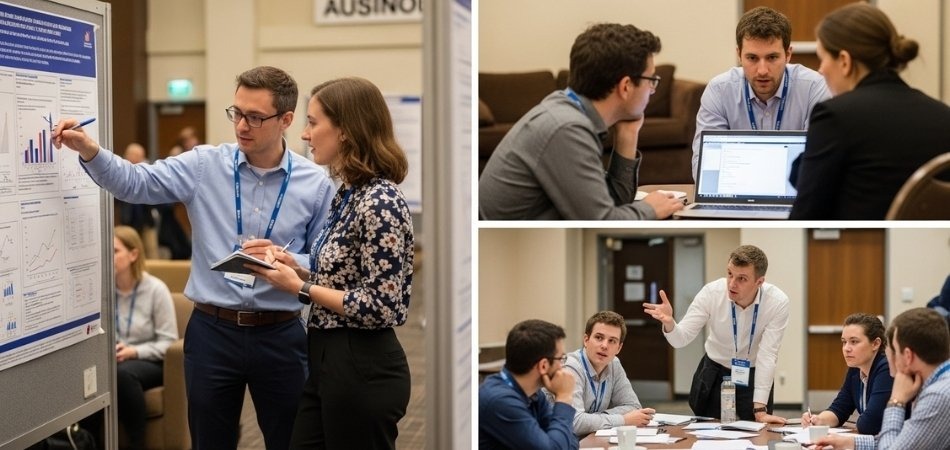
How Researchers Turn Conference Interactions Into Real Collaboration?
Conference conversations create opportunity, but real research collaboration develops through clear follow-up, shared planning, and ongoing academic engagement. In many cases, a brief discussion at a conference becomes the foundation for a structured partnership that grows into joint research, publication, or long-term scholarly cooperation.
Step 1: Identifying Shared Research Interests
The first stage of collaboration usually begins when researchers notice overlap in topics, methods, or policy concerns. These early points of connection often emerge during presentations, panel discussions, or informal academic conversations.
At this stage, researchers often identify:
- Similar research questions
- Complementary expertise
- Shared interest in a specific economic issue
- Potential value in working together
Step 2: Continuing Communication
After the conference, researchers usually continue the conversation through email or virtual meetings. This step is important because it helps both sides move from casual interest to serious academic discussion.
Scholars may exchange:
- Research papers
- Datasets
- Methodological notes
- Literature references
- Early research proposals
This stage helps determine whether the collaboration is practical, relevant, and academically worthwhile.
Step 3: Defining a Research Objective
Once mutual interest is clear, researchers begin shaping a specific collaboration goal. Instead of keeping the discussion broad, they narrow it into a defined project or outcome.
This may include work on:
- Comparative economic studies
- Cross country policy analysis
- Joint academic papers
- Collaborative grant proposals
A clearly defined objective gives the partnership direction and makes the next steps easier to organize.
Step 4: Organizing the Research Partnership
Successful collaboration requires structure. Researchers need to decide how the work will be shared and what each partner will contribute.
Responsibilities may include:
- Data collection
- Statistical analysis
- Literature review
- Writing sections of the paper
- Reviewing and refining results
This stage turns an idea into a working academic partnership.
Step 5: Publishing and Expanding Collaboration
Many conference-based collaborations eventually lead to visible academic outcomes. Once the first project is completed, the relationship often continues through future studies or broader research engagement.
These outcomes may include:
- Co authored journal articles
- Conference presentations
- Working papers
- Funded research proposals
- Long term academic partnerships
Through this process, a simple conference interaction can grow into a meaningful research collaboration with lasting academic value.
From First Interaction to Long Term Research Partnership
Academic conferences do not create collaboration automatically, but they do create the first connection. When researchers follow up with clear communication, shared goals, and practical planning, a short discussion can develop into a productive partnership with long term academic value.
Practical Ways to Build Research Collaboration at an Academic Economics Conference
Researchers can build research collaboration at an academic economics conference by preparing clear goals, joining relevant sessions, and following up with scholars afterward. These practical steps help turn academic conversations into partnerships, strengthen networking outcomes, and support long term collaborative research success.
Before attending the conference
Preparing before the conference helps researchers communicate their ideas clearly, identify relevant scholars, and create meaningful conversations that increase the chances of building productive academic research collaborations.
- A clear explanation of your research topic
- Key research questions you are exploring
- Potential areas where collaboration could help
This preparation makes networking conversations more productive.
During the conference
Active participation during the conference helps researchers connect with peers, exchange ideas, and identify scholars with similar interests, creating stronger opportunities for meaningful research collaboration and academic partnerships.
- Attending sessions related to your research area
- Asking thoughtful questions during discussions
- Introducing your research interests to other scholars
- Participating in networking events and workshops
Active participation increases the likelihood of meeting researchers with similar interests.
After the conference
Following up after the conference helps researchers strengthen new connections, continue academic discussions, and turn initial interactions into meaningful collaboration opportunities that support future joint research and scholarly partnerships.
- Send a short message to the researchers you met
- Share your research paper or working draft
- Suggest possible collaboration ideas
- Schedule a virtual discussion to explore research opportunities
Consistent follow-up helps transform initial connections into meaningful research partnerships.
Challenges in Research Collaboration and How Conferences Help Solve Them?
Research collaboration often faces barriers such as limited networking, geographic distance, and difficulty finding aligned interests. Academic conferences help solve these challenges by connecting researchers, encouraging direct discussion, and creating structured opportunities for feedback, partnership building, and long-term scholarly collaboration.
Common Collaboration Challenges
- Limited access to academic networks
- Difficulty finding researchers with similar interests
- Geographic distance between institutions
- Lack of feedback on early research ideas
- Limited visibility for emerging researchers
The Way Academic Conferences Help Address These Challenges
| Research Challenge | Conference Solution |
| Limited academic networks | Conferences bring scholars together in one location |
| Difficulty finding aligned research interests | Topic based sessions group researchers by specialization |
| Geographic barriers | International participants meet face to face |
| Limited feedback | Live discussions provide immediate academic critique |
| Low research visibility | Presentations and poster sessions showcase research |
By reducing these barriers, conferences create a supportive academic environment where economists can connect, exchange knowledge, and develop collaborative research initiatives.
Frequently Asked Questions
These questions address practical concerns readers often have after learning how conferences support academic collaboration. They expand the topic by covering participation, submissions, student access, and publishing value that may influence conference planning and decision-making.
Can Graduate Students Attend An Academic Economics Conference In Canada?
Yes, many economics conferences in Canada welcome graduate students, researchers, academics, and professionals, and some universities host events specifically including students in the research community.
Do You Need To Present A Paper To Benefit From Attending?
No. Many attendees benefit from listening to presentations, joining discussions, meeting scholars, and learning about current research, even when they are not presenting their own work.
Are Hybrid Or Online Economics Conferences Useful For Collaboration?
Yes. Some Canadian economics conferences now include in person and online participation, which can still support research exchange, networking, and continued scholarly interaction.
How Do Researchers Choose The Right Economics Conference In Canada?
Researchers usually compare the conference theme, participant profile, session relevance, presentation opportunities, and networking value before deciding whether an event fits their goals.
What Happens After Submitting A Paper To An Academic Conference?
Most conferences review submissions first. If accepted, the researcher may be invited to present in a session, join a panel, or participate in a poster format, depending on the event structure.
Can Attending A Conference Help With Future Publishing Opportunities?
Often, yes. Presenting at a conference can improve visibility, generate feedback, and help researchers refine work before submitting it for publication or expanding it into a larger project.
Last Words
Research collaboration often begins with connection, and that is exactly where conferences make a real difference. Understanding how an academic economics conference in Canada supports research collaboration shows why these events matter for economists, students, and scholars who want to improve ideas, expand networks, and build stronger academic partnerships.
More than a place to present research, these conferences create opportunities for feedback, shared learning, and future projects. Knowing the way academic economics conferences in Canada supports research collaboration can help researchers make better academic choices and turn valuable interactions into lasting research outcomes.