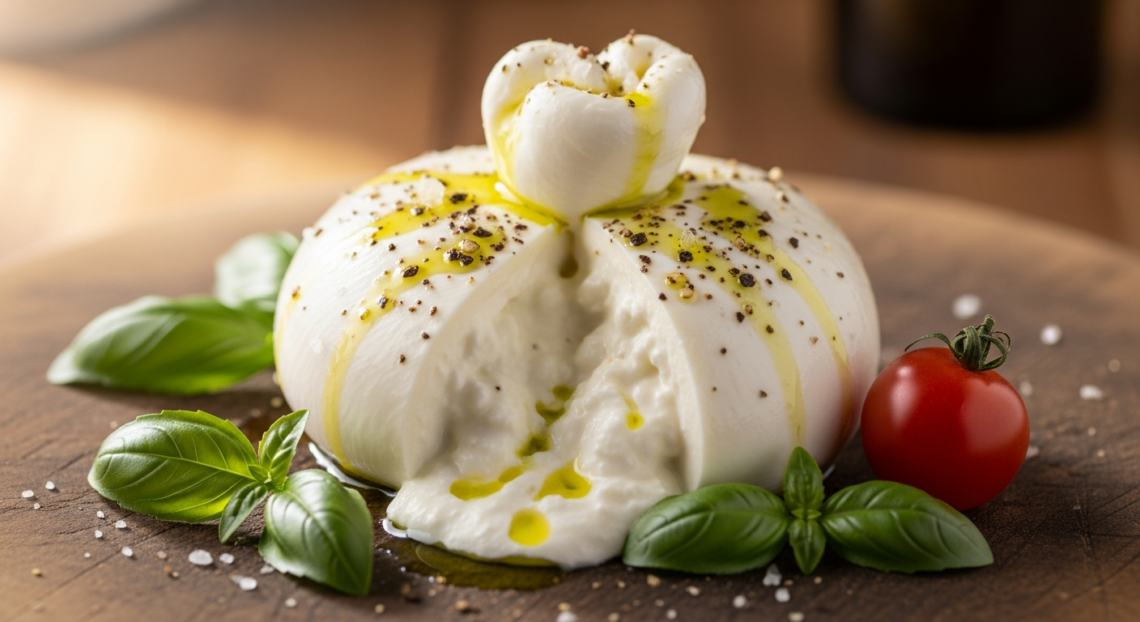
Burrata Cheese: An Elegant Introduction
| Artisanal Highlight | |
|---|---|
|
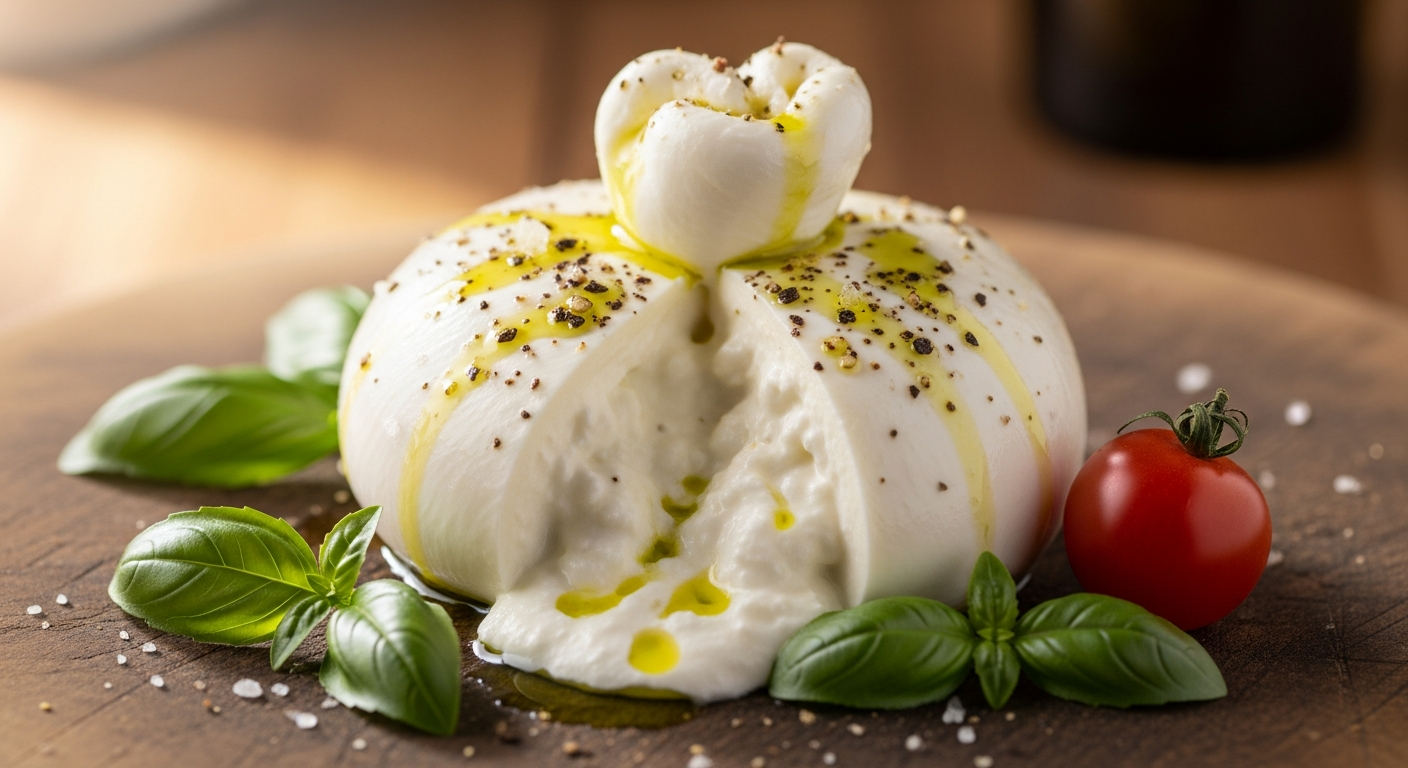
“Burrata cheese represents the harmony between simplicity and indulgence. A masterpiece of Italian dairy craftsmanship.” |
Introduction to Burrata Cheese and Its Culinary Appeal
Burrata cheese has earned a distinguished place in global cuisine, admired for its luxurious texture and delicate flavor. Originating from Italy, burrata cheese represents the harmony between simplicity and indulgence. At first glance it resembles fresh mozzarella, but once opened it reveals a rich, creamy interior that sets it apart. This unique contrast has made burrata cheese a favorite among chefs, food enthusiasts, and home cooks seeking an elevated yet approachable ingredient.
The Origins and History of Burrata Cheese
Burrata cheese traces its roots to the Apulia region in southern Italy, where it was first created in the early twentieth century. Cheesemakers developed burrata as an innovative way to reduce waste by reusing leftover mozzarella curds. These curds were mixed with fresh cream and enclosed in a pouch of mozzarella, resulting in a product that was both practical and indulgent. Over time, burrata cheese moved beyond its humble beginnings to become a symbol of Italian dairy craftsmanship and culinary tradition.
How Burrata Cheese Is Made
The production of burrata cheese involves careful technique and high-quality milk. The outer shell is formed from mozzarella, stretched and shaped while still warm and elastic. The interior filling, known as stracciatella, is made by combining shredded mozzarella curds with fresh cream. Once the shell is filled, it is sealed to create a soft pouch that holds the creamy center. This dual structure is what defines burrata cheese, delivering a contrast between the firm exterior and the luscious interior.
Flavor Profile and Texture of Burrata Cheese
Burrata cheese is celebrated for its mild, milky flavor and smooth, buttery mouthfeel. The mozzarella exterior offers a subtle chew, while the creamy filling flows gently when cut. Unlike aged cheeses, burrata cheese has a fresh and clean taste that highlights the quality of the milk used. Its richness is balanced rather than overwhelming, making it versatile enough to complement a wide range of dishes without dominating other flavors.
Burrata Cheese in Traditional Italian Cuisine
In Italy, burrata cheese is often enjoyed in the simplest ways to honor its freshness. It is commonly served with ripe tomatoes, olive oil, and fresh bread, allowing its natural flavor to shine. Burrata cheese is also paired with cured meats, grilled vegetables, or lightly dressed greens. Traditional Italian cuisine emphasizes minimal preparation, reflecting the belief that high-quality ingredients need little embellishment to impress.
Modern Culinary Uses of Burrata Cheese
Beyond traditional settings, burrata cheese has become a popular component in modern and international cuisine. Chefs incorporate it into pasta dishes, pizzas, and salads, where its creamy interior adds depth and indulgence. Burrata cheese is also used as a finishing touch on roasted vegetables, grain bowls, and even certain desserts. Its adaptability allows it to enhance both savory and creative culinary compositions.
Nutritional Aspects of Burrata Cheese
Burrata cheese offers nutritional value alongside its indulgent qualities. It provides protein, calcium, and essential fats derived from milk. However, due to its cream-filled center, burrata cheese is higher in fat compared to standard mozzarella. Moderation is key when incorporating it into a balanced diet. When enjoyed thoughtfully, burrata cheese can be part of a nutritious eating pattern that values both pleasure and quality.
Selecting and Storing Burrata Cheese
Choosing high-quality burrata cheese is essential for the best experience. Freshness is the most important factor, as burrata is meant to be consumed soon after production. The exterior should appear smooth and moist, while the interior should be creamy and fragrant. Burrata cheese should be stored in refrigeration and ideally consumed within a short period to preserve its texture and flavor. Serving it at room temperature enhances its creaminess and overall appeal.
Burrata Cheese Compared to Other Fresh Cheeses
Burrata cheese is often compared to mozzarella, ricotta, and other fresh cheeses, yet it remains distinct. While mozzarella offers a firm and elastic texture, burrata cheese adds an unexpected richness through its creamy core. Ricotta, on the other hand, has a grainier consistency and a slightly different flavor profile. Burrata cheese stands out by combining structure and creaminess in a single product, delivering a unique sensory experience.
Cultural and Global Popularity of Burrata Cheese
The rise in global popularity of burrata cheese reflects a broader appreciation for authentic and artisanal foods. As international travel and culinary exploration have grown, so has interest in regional Italian specialties. Burrata cheese has become a highlight on restaurant menus worldwide, symbolizing quality, craftsmanship, and indulgence. Its visual appeal and luxurious texture make it especially attractive in contemporary food culture.
Pairing Burrata Cheese With Ingredients and Flavors
Burrata cheese pairs exceptionally well with a variety of ingredients. Fresh fruits, tomatoes, herbs, and olive oil enhance its natural sweetness and creaminess. It also balances well with acidic components such as citrus or balsamic reductions, which cut through its richness. Thoughtful pairing allows burrata cheese to act as both a focal point and a complementary element within a dish.
Conclusion on the Enduring Appeal of Burrata Cheese
Burrata cheese continues to captivate culinary enthusiasts through its elegant simplicity and indulgent texture. Rooted in Italian tradition yet embraced by modern cuisine, it represents the timeless appeal of well-crafted food. Whether enjoyed in its most traditional form or incorporated into innovative recipes, burrata cheese offers a unique sensory experience that celebrates freshness, quality, and balance.

