The dolly zoom is one of the most striking and psychologically powerful camera techniques in filmmaking. Often described as visually unsettling or dreamlike, it alters the viewer’s perception of space while keeping the subject the same size in the frame. This effect has been used in iconic films to communicate fear, realization, obsession, and emotional shock. Though it looks complex, the dolly zoom is a masterclass in how technical precision can amplify storytelling.
What Is a Dolly Zoom
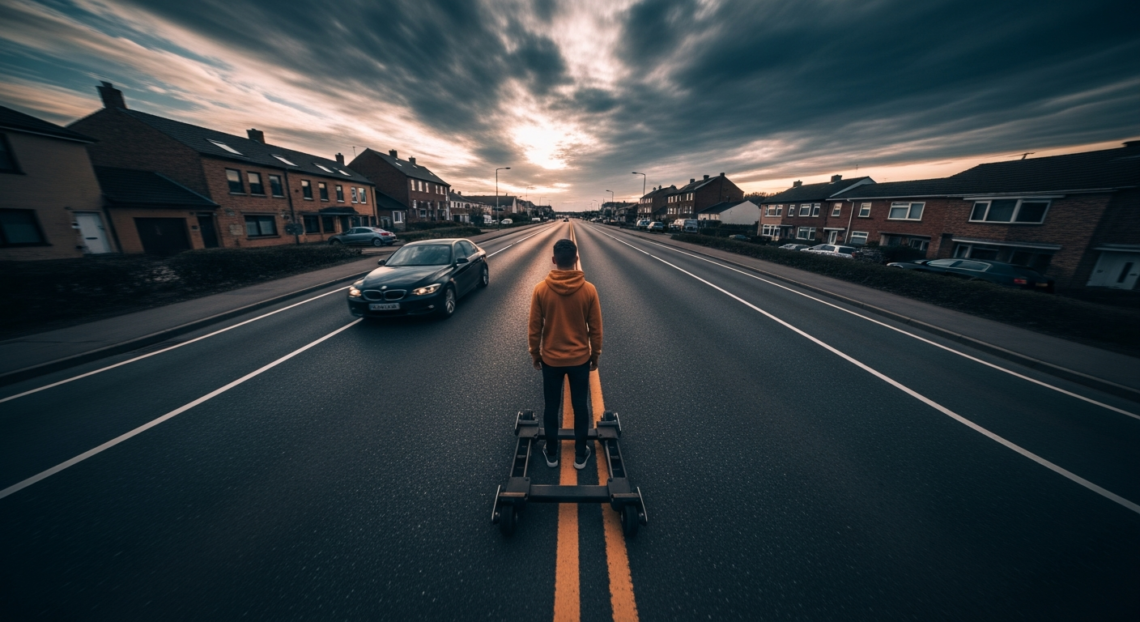
A dolly zoom is a camera movement where the camera physically moves toward or away from a subject on a dolly while simultaneously zooming the lens in the opposite direction. As a result, the subject stays roughly the same size in the frame, but the background appears to stretch, compress, or distort dramatically.
When the camera dollies forward and zooms out, the background seems to expand and pull away. When the camera dollies backward and zooms in, the background compresses and feels closer. This manipulation of spatial perception is what gives the dolly zoom its signature surreal quality.
The Origin of the Dolly Zoom
The dolly zoom is most famously associated with Alfred Hitchcock, who popularized the technique in the 1958 film Vertigo. Because of this, it is often called the “Vertigo effect.” Hitchcock used it to visually represent the main character’s fear of heights, allowing the audience to feel the disorientation rather than simply observe it.
Although Hitchcock made the technique famous, variations of the dolly zoom had been experimented with earlier. However, Vertigo cemented it as a storytelling tool rather than just a technical trick.
How the Dolly Zoom Works Technically
The illusion behind the dolly zoom relies on the relationship between focal length and camera distance. As the camera moves closer to the subject, the lens zooms out to maintain framing. As the camera moves away, the lens zooms in. This synchronized movement must be extremely precise.
Wide-angle lenses exaggerate depth, while telephoto lenses compress it. By changing focal length during the dolly movement, the background’s depth cues shift while the subject remains stable. This is why the background appears to warp even though nothing in the scene is physically changing.
Emotional Impact of the Dolly Zoom
The dolly zoom is rarely used casually. It is almost always tied to a character’s internal experience. The effect can evoke panic, dread, realization, shock, or emotional collapse. Because it visually contradicts how humans normally perceive space, it creates a sense that something is “wrong.”
Filmmakers often deploy a dolly zoom at moments when a character discovers a devastating truth, feels suddenly vulnerable, or loses control. The audience doesn’t just see the moment; they feel it on a subconscious level.
Famous Movies That Use the Dolly Zoom
Many legendary films have used the dolly zoom to unforgettable effect. In Vertigo, it represents acrophobia. In Jaws, Steven Spielberg uses it to capture Chief Brody’s sudden realization that a shark attack is happening. In Goodfellas, Martin Scorsese uses a variation to reflect paranoia and instability.
Other notable examples include The Lord of the Rings, where the dolly zoom emphasizes Frodo’s fear when he senses the Ringwraiths, and Poltergeist, where it heightens supernatural tension. Each use is different, but the emotional intention is always clear.
Dolly Zoom vs Regular Zoom
A regular zoom changes focal length without moving the camera. This simply brings the subject closer or farther away and feels observational. A dolly zoom, by contrast, combines physical movement with optical adjustment, creating a psychological effect rather than a practical one.
Because a regular zoom does not alter spatial relationships in the same way, it rarely produces the same emotional impact. The dolly zoom feels immersive, while a standard zoom feels informational.
When Filmmakers Should Use a Dolly Zoom
The dolly zoom is best used sparingly. Because it is so noticeable, overuse can feel gimmicky or distracting. It works best at pivotal moments in a story, especially when a character’s internal state shifts dramatically.
It is particularly effective in thrillers, horror films, psychological dramas, and fantasy movies. Any genre that relies on emotional tension or altered perception can benefit from this technique when used with intention.
Challenges of Shooting a Dolly Zoom
Executing a dolly zoom is technically demanding. The timing between the dolly movement and the zoom must be perfectly synchronized, or the subject will drift out of frame. It also requires enough physical space to move the camera smoothly.
Focus pulling can be difficult, especially with shallow depth of field. Lighting consistency is another challenge, as moving the camera can change exposure and shadows. For these reasons, dolly zooms are often rehearsed extensively before filming.
Dolly Zoom in Modern Digital Filmmaking
With modern technology, some filmmakers attempt to recreate the dolly zoom digitally in post-production. While this can approximate the visual effect, purists argue that it lacks the organic depth changes of a true optical dolly zoom.
That said, digital tools have made the technique more accessible to indie filmmakers. Motorized dollies, programmable zoom lenses, and stabilized rigs allow more creators to experiment with the effect without massive budgets.
Why the Dolly Zoom Still Matters
Despite being decades old, the dolly zoom remains relevant because it taps into something fundamental about human perception. It visually represents emotional disruption in a way dialogue cannot. When used well, it becomes invisible as a “technique” and instead feels like a natural extension of the story.
The dolly zoom endures because cinema is not just about what we see, but how we feel. Few camera moves communicate internal experience as powerfully as this one.
FAQs About Dolly Zoom
What is another name for the dolly zoom
The dolly zoom is also known as the Vertigo effect, named after Alfred Hitchcock’s film Vertigo.
Is a dolly zoom the same as a zoom shot
No. A dolly zoom combines camera movement with lens zooming, while a zoom shot only changes focal length without moving the camera.
Why does the dolly zoom feel unsettling
It disrupts normal spatial perception, making the background behave in a way the human eye does not expect, which triggers psychological discomfort.
Can beginners create a dolly zoom
Yes, but it requires practice, planning, and precise coordination. Using a tripod or dolly and rehearsing the movement helps significantly.
Is the dolly zoom overused in films
No, because it is difficult to execute and very noticeable. Most filmmakers use it sparingly to preserve its emotional impact.