Gold has been treasured for thousands of years as a symbol of wealth, stability, and prestige. Its value is not only sentimental but also financial, as gold acts as a hedge against inflation and economic instability. The gold price is influenced by a combination of global, economic, and political factors, making it an essential metric for investors, traders, and consumers alike.
What Determines Gold Price
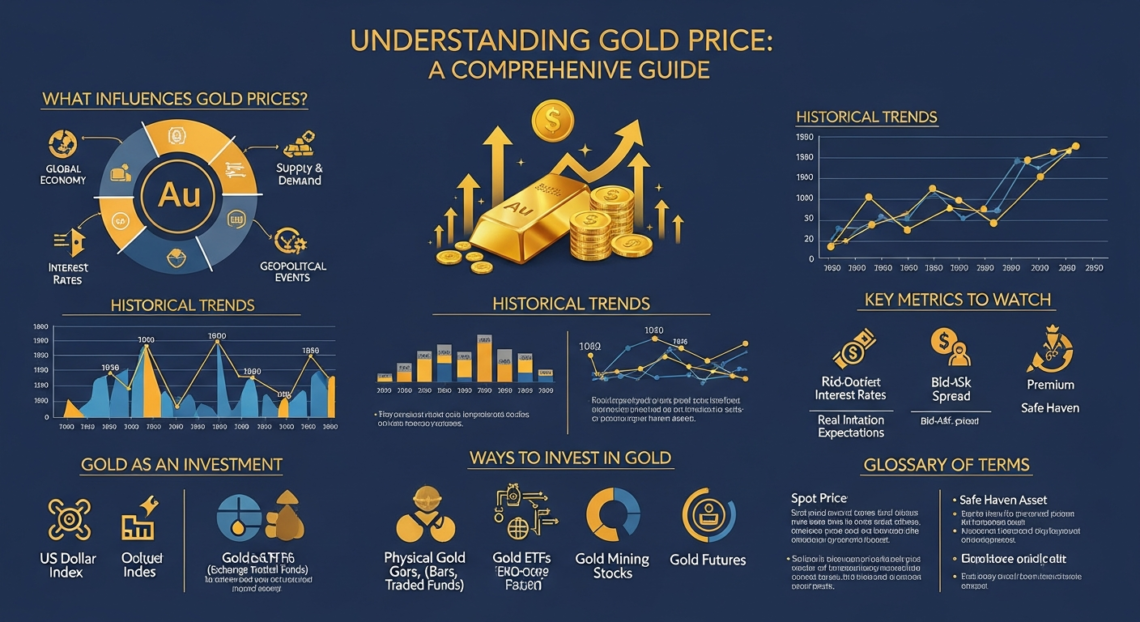
The gold price is primarily determined by supply and demand dynamics in the global market. Factors such as mining output, central bank policies, and investor sentiment play a major role in shaping its value. Unlike stocks or bonds, gold does not yield interest or dividends, which means its price is driven entirely by market perceptions of its future value and scarcity.
The international benchmark for gold is often quoted in US dollars per ounce. Changes in currency value, particularly the US dollar, significantly influence gold prices. When the dollar strengthens, gold becomes more expensive in other currencies, potentially reducing global demand. Conversely, a weak dollar tends to push gold prices higher.
Historical Trends of Gold Price
Gold has experienced significant fluctuations over the centuries. Historically, it has maintained its allure during periods of economic turmoil. During the 1970s, high inflation and geopolitical tensions led to record highs in gold price. Similarly, during the 2008 financial crisis, investors flocked to gold as a safe haven, causing a rapid increase in its price.
Understanding historical trends helps investors anticipate potential market movements. While past performance does not guarantee future outcomes, it highlights the resilience of gold as an asset class, especially during uncertain times.
Factors Affecting Gold Price
Several interlinked factors affect the gold price. Economic indicators such as interest rates, inflation, and employment statistics play a crucial role. For instance, rising inflation typically boosts gold prices, as investors look to protect their wealth.
Geopolitical events, including conflicts, sanctions, and global trade tensions, also impact gold prices. When uncertainty arises, gold is often viewed as a stable investment, leading to increased demand and higher prices.
Central banks and governments hold substantial gold reserves. Decisions related to buying or selling gold can significantly influence global prices. Large-scale purchases often drive prices up, while selling can create downward pressure.
How Gold Price is Traded
Gold is traded in various forms, including physical bullion, coins, exchange-traded funds (ETFs), and futures contracts. The gold market is one of the most liquid and accessible investment markets globally.
Investors can trade gold in real-time on international exchanges such as the London Bullion Market and the New York Mercantile Exchange. Prices are updated frequently to reflect ongoing market conditions, making gold trading highly dynamic.
Gold Price and Investment
Investing in gold can be a strategic decision for portfolio diversification. Unlike stocks or bonds, gold often has an inverse relationship with the stock market. When equities decline, gold prices usually rise, providing a balance against market volatility.
There are multiple investment options for gold. Physical gold in the form of bars or coins offers tangible ownership but requires secure storage. Digital and paper gold, such as ETFs, provide exposure to gold price movements without the need for physical handling.
Impact of Currency Fluctuations on Gold Price
Gold is globally priced in US dollars, making currency fluctuations a key factor in determining gold price for international investors. A weaker dollar generally increases the price of gold, as it becomes cheaper for foreign buyers. Conversely, a stronger dollar may reduce global demand, causing a decline in gold prices.
Emerging market currencies also play a role. For example, in countries like India and China, where gold consumption is high, local currency depreciation can drive domestic demand, influencing both local and global gold prices.
Gold Price and Inflation
Gold is widely regarded as a hedge against inflation. When inflation rises, the purchasing power of fiat currency decreases, but gold typically retains its value. Investors often buy gold during high inflation periods to preserve wealth, which drives up demand and increases the gold price.
The correlation between gold and inflation is not always immediate. Market sentiment, interest rates, and geopolitical stability can cause short-term fluctuations. However, over the long term, gold remains a reliable store of value.
Global Demand and Gold Price
The global demand for gold comes from various sectors, including jewelry, technology, and central bank reserves. Jewelry remains the largest consumer of gold, particularly in countries like India and China. Technology uses gold in electronics due to its conductivity and corrosion resistance.
Central banks’ gold buying or selling strategies can also influence prices. Countries may increase reserves during economic uncertainty or reduce holdings to stabilize their economies. The balance of supply and demand in these areas plays a crucial role in determining gold price.
Forecasting Gold Price
Predicting gold price is complex due to its sensitivity to multiple factors. Analysts consider global economic indicators, geopolitical events, market trends, and historical performance. While no forecast is guaranteed, understanding these factors can help investors make informed decisions.
Short-term gold price fluctuations are often driven by speculation and investor sentiment, while long-term trends depend on fundamental economic conditions. Combining technical analysis with macroeconomic insights is a common approach to forecasting gold price movements.
Tips for Buying Gold
Buying gold requires careful planning and research. First, determine your investment objective—whether it is wealth preservation, portfolio diversification, or profit-making.
Second, choose the right form of gold. Physical gold offers security but requires storage, while digital gold and ETFs provide convenience and liquidity.
Third, monitor gold price trends and consider market timing. While it is challenging to time the market perfectly, understanding demand cycles and economic indicators can help make more informed decisions.
Risks Associated with Gold Investment
Gold investment carries certain risks despite its reputation as a safe asset. Price volatility is the most significant risk, as gold can experience sharp short-term fluctuations. Economic changes, policy decisions, and market sentiment can all contribute to this volatility.
Another risk is storage and security for physical gold. Storing gold at home or in safe deposit boxes involves potential theft and additional costs. Investors in digital gold or ETFs face counterparty and liquidity risks, depending on the platform or fund chosen.
Conclusion
The gold price is influenced by a combination of economic, political, and market factors, making it an essential metric for investors and consumers. Understanding its historical trends, factors affecting price, and methods of investment can help individuals make informed decisions.
While gold offers security and a hedge against inflation, it is not without risks. Careful planning, market research, and diversification are crucial for maximizing benefits from gold investments.
Frequently Asked Questions about Gold Price
What is the current gold price trend?
The gold price trend fluctuates daily based on global economic indicators, currency strength, and investor sentiment. It is important to check real-time updates for accurate information.
Why does gold price rise during economic uncertainty?
During uncertainty, investors view gold as a safe haven. Increased demand drives up the gold price.
How does currency affect gold price?
Gold is priced in US dollars. When the dollar strengthens, gold becomes more expensive internationally, potentially lowering demand. A weaker dollar tends to push prices higher.
Is gold a good investment during inflation?
Yes, gold is traditionally considered a hedge against inflation, as it retains value while fiat currency may lose purchasing power.
What are the safest ways to invest in gold?
Safe options include buying physical gold from reputable sources, investing in gold ETFs, or holding gold-backed digital assets. Proper storage and security are essential for physical gold.