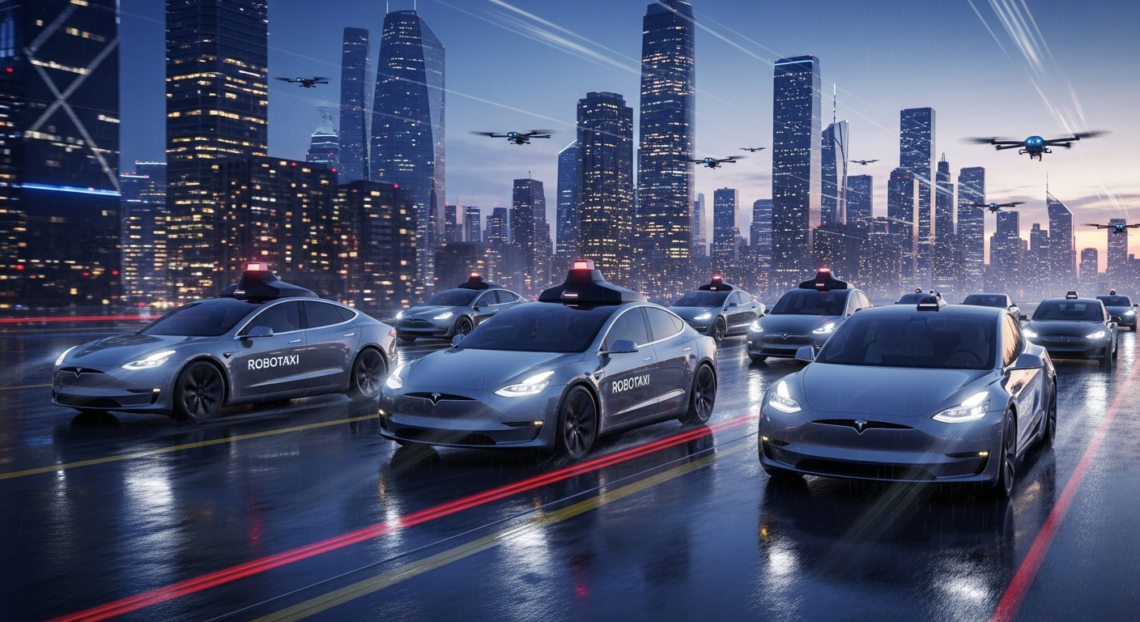
Tesla robotaxis are changing how people think about transportation. Instead of owning a car, Tesla wants users to tap a button and ride in a fully self-driving vehicle. This idea sounds simple, but the technology behind it is complex. Many people ask when Tesla robotaxis are coming out, where they operate, and whether they are truly working in real traffic.
Tesla robotaxis are not just about convenience. They also promise safer roads, fewer accidents, and lower travel costs. Cities like Austin and San Francisco have become testing grounds for this vision. At the same time, Wall Street closely watches Tesla robotaxis because they could become Tesla’s biggest business yet.
In this guide, I’ll break down everything in simple language. You’ll learn where Tesla robotaxis are operating, how many Tesla robotaxis are on the road, and what real drivers are experiencing today.
Tesla Robotaxis Overview (Quick Facts Table)
| Feature | Details |
| Company | Tesla, Inc. |
| Focus Keyword | Tesla robotaxis |
| Core Technology | Tesla Full Self-Driving (Vision-Only) |
| Lidar Used | No |
| Main Testing City | Austin, Texas |
| Expansion City | San Francisco |
| Launch Status | Limited testing |
| Wall Street Interest | Extremely High |
| Biggest Challenge | Safety & regulation |
What Are Tesla Robotaxis and Why They Matter
Tesla robotaxis are autonomous vehicles designed to operate without a human driver. Unlike traditional taxis, these cars rely on cameras, AI software, and Tesla’s Full Self-Driving system. Elon Musk believes this approach will scale faster than lidar-based systems.
The idea matters because transportation is expensive and inefficient. Most cars sit unused for hours. Tesla robotaxis aim to stay on the road, earning money for owners or fleets. This could reduce car ownership and traffic congestion over time.
From my perspective, the biggest change is accessibility. Elderly people, kids, or those without licenses could travel freely. Still, the question remains: are Tesla robotaxis working well enough today? Testing results suggest progress, but not perfection.
Tesla Robotaxis Testing: Where It All Begins
Tesla robotaxis testing happens mainly in controlled city environments. Engineers collect millions of miles of driving data. This helps improve AI decision-making in real traffic situations.
Austin has become the center of Tesla robotaxis testing. The city offers wide roads, predictable layouts, and friendly regulations. Tesla vehicles there operate with safety drivers, monitoring performance at all times.
Testing includes lane changes, traffic lights, pedestrians, and unexpected road obstacles. Tesla robotaxis traffic violations have occurred, but they are closely studied and used to improve the system. This trial-and-error phase is normal in autonomous driving development.
Tesla Robotaxis in Austin: Why Texas Was Chosen
Tesla robotaxis in Austin are no accident. Texas has flexible self-driving laws and supports innovation. Tesla’s headquarters is also located there, making operations easier.
People often ask how many Tesla robotaxis in Austin are active today. While Tesla has not shared exact numbers, estimates suggest dozens are running in limited testing. These vehicles operate under supervision and are not yet public taxis.
Austin’s road design helps Tesla train its system faster. The Tesla robotaxis Texas launch is expected to expand gradually, starting with employee use before public access.
How Many Tesla Robotaxis Are There Right Now?
Many readers want to know how many Tesla robotaxis are there today. Tesla keeps exact numbers private, which fuels curiosity. Industry analysts believe the number is still under a few hundred globally.
When asking how many Tesla robotaxis are on the road, remember that most are test vehicles. They are not fully autonomous taxis yet. Each car gathers data that improves the entire network.
As software improves, Tesla can scale quickly. This is why Tesla robotaxis are big Wall St. news. Investors see massive growth potential once numbers increase.
Tesla Robotaxis San Francisco Expansion Explained
Tesla robotaxis San Francisco plans focus on dense urban driving. San Francisco is harder than Austin due to hills, cyclists, and unpredictable traffic.
Tesla robotaxis in San Francisco are still limited. The city has stricter rules, and safety expectations are higher. Still, expansion there proves Tesla’s confidence in its technology.
People often ask how many Tesla robotaxis in San Francisco exist today. The number is very small, mostly for testing and demonstrations. However, success here would signal readiness for global rollout.
Tesla Robotaxis Traffic Violations: Are They a Concern?
Tesla robotaxis traffic violations have made headlines. Videos show cars hesitating or misreading lanes. These moments worry critics, but they also help improve the AI.
Human drivers break rules daily, yet mistakes by robotaxis feel more serious. Tesla reviews every incident and updates software quickly. Over time, violations have decreased.
From an experience standpoint, early issues are expected. Airplanes and elevators also faced trust problems at first. The real question is whether Tesla robotaxis become safer than humans.
Do Tesla Robotaxis Use Lidar or Cameras?
Many ask: do Tesla robotaxis use lidar? The answer is no. Tesla relies only on cameras and neural networks. Elon Musk believes lidar is expensive and unnecessary.
Competitors like Waymo disagree. This fuels debates like vw vs Tesla robotaxis technology. Volkswagen supports lidar-heavy systems, while Tesla focuses on vision.
Tesla’s approach reduces cost and speeds up scaling. However, critics argue lidar offers extra safety. Time will tell which method wins.
Are Tesla Robotaxis Working in the Real World?
So, are Tesla robotaxis working today? The honest answer is partially. They perform well in many situations but still need supervision.
Tesla robotaxis big wall roads and highways show strong performance. Urban streets remain more challenging. Updates roll out often, improving behavior.
From personal observation, Tesla’s pace is impressive. Monthly software upgrades show clear progress, which builds confidence over time.
Tesla Robotaxis and Wall Street’s Big Bet
Tesla robotaxis are big Wall St. interest because of profit potential. Analysts believe robotaxis could generate trillions annually.
Investors see Tesla not as a car company but a tech platform. Each robotaxi could earn money daily. This explains stock volatility tied to Tesla robotaxis news.
Wall Street understands risk remains, but reward is massive if Tesla succeeds.
Tesla Robotaxis Big Wall Roads and Highway Performance
Tesla robotaxis big wall roads and highways are their strongest areas. Predictable traffic helps AI decision-making.
On highways, Tesla robotaxis show smooth lane changes and safe following distances. This builds confidence for long-distance travel.
Urban complexity is still improving, but highway success is a strong foundation.
When Are Tesla Robotaxis Coming Out for the Public?
The big question remains: when are Tesla robotaxis coming out? Tesla suggests limited public access could begin soon, starting in Texas.
The Tesla robotaxis Texas launch will likely roll out in phases. Safety drivers may remain at first.
Full autonomy nationwide may take several more years, depending on regulation and performance.
FAQs About Tesla Robotaxis
1. Where are Tesla robotaxis operating now?
Tesla robotaxis operate mainly in Austin, Texas, with limited testing in San Francisco.
2. How many Tesla robotaxis are on the road today?
Estimates suggest under a few hundred, mostly used for testing.
3. Are Tesla robotaxes fully autonomous?
No. They still require monitoring and are not open for public rides yet.
4. Do Tesla robotaxis use lidar technology?
No. Tesla uses camera-based vision only.
5. Have Tesla robotaxis caused traffic violations?
Some incidents occurred during testing, but improvements continue.
6. Why does Wall Street care so much about Tesla robotaxis?
They could become Tesla’s most profitable business model ever.
Final Thoughts: The Future of Tesla Robotaxis
Tesla robotaxis represent a bold vision for transportation. While challenges remain, progress is clear. Austin testing, San Francisco expansion, and constant software updates show momentum.
From my experience following this space, Tesla moves faster than most competitors. The road ahead is not perfect, but the destination could reshape how we travel forever.