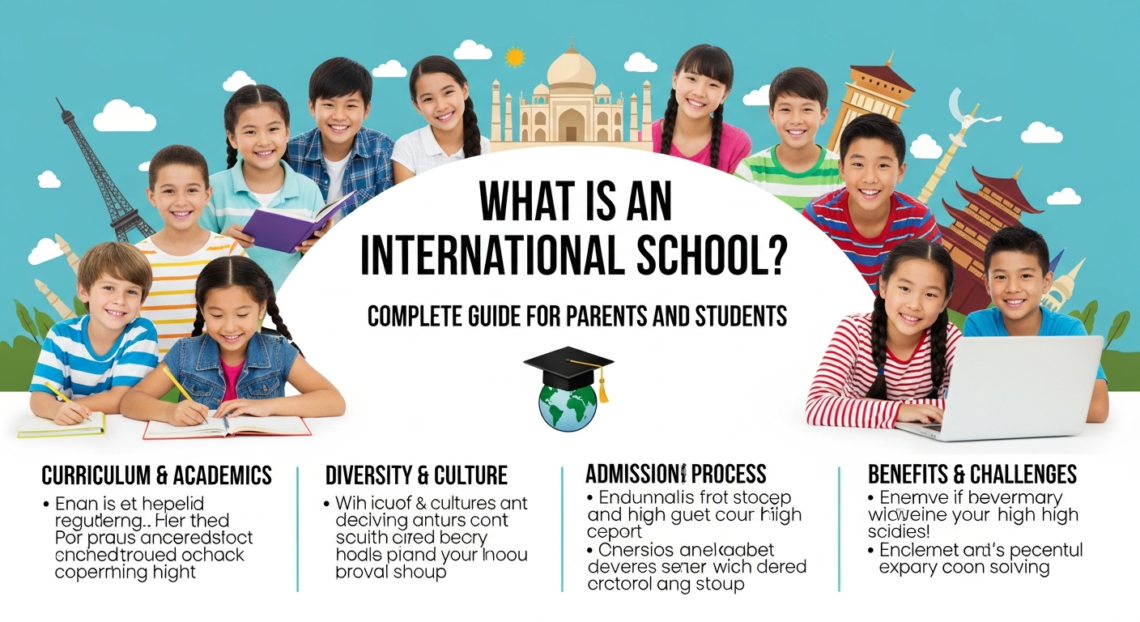
Education is evolving fast, and many parents are exploring global learning options for their children. But what is an international school? In simple terms, an international school is an institution that offers a curriculum recognized globally and teaches students from diverse backgrounds. These schools focus on creating an inclusive environment where children learn academic subjects alongside cultural awareness, global values, and language skills.
Parents often choose international schools for quality education, exposure to global teaching standards, and pathways to universities abroad. In this guide, we’ll explore everything you need to know about international schools, including definitions from UNESCO and IB, examples in India and Japan, and the unique benefits these schools offer.
What Is an International School? Basic Definition
A straightforward answer: an international school is a school that provides education based on international curricula. Unlike traditional schools that follow local education systems, international schools prepare students for global higher education. They focus on multilingual learning, critical thinking, and understanding cultures worldwide.
International schools often include programs like the International Baccalaureate (IB), Cambridge IGCSE, or American AP courses. They welcome students from various nationalities and encourage collaboration in a multicultural environment.
What Is an International School Definition (UNESCO)
According to UNESCO, an international school is an institution that promotes international understanding, respect, and cooperation among students from different countries. UNESCO emphasizes that these schools aim to nurture global citizens who can think critically, communicate effectively, and contribute to society.
This definition highlights the broader social purpose of international schools beyond academics—they focus on building character, empathy, and lifelong learning skills.
What Is an International School Definition (IB)
The International Baccalaureate (IB) defines an international school as one that offers an educational program designed to meet the needs of students living in international settings. The IB emphasizes inquiry-based learning, creativity, and social responsibility.
IB schools often include three programs: the Primary Years Program (PYP), Middle Years Program (MYP), and Diploma Program (DP). These programs focus on both academic rigor and personal development.
What Is an International School in India
In India, international schools are gaining popularity in cities like Delhi, Mumbai, and Bangalore. A typical international school in India combines global curricula with Indian cultural values. They often offer IB, Cambridge, or American education systems.
Indian international schools also emphasize English proficiency, STEM subjects, and extracurricular activities such as sports, arts, and leadership programs. These schools prepare students to study abroad or pursue global career paths.
What Is an International School in Japan
Japan has seen a rise in international schools, especially in Tokyo and Osaka. International schools in Japan cater to both expatriate children and Japanese students seeking global education. Many offer English-medium instruction and curricula like IB or British IGCSE.
These schools help students adapt to multicultural environments, build global networks, and improve foreign language skills, which are highly valuable in today’s interconnected world.
Key Features of an International School
International schools share several key features:
- Global Curriculum: IB, Cambridge, or American standards.
- Diverse Student Body: Students from multiple nationalities.
- Multilingual Learning: Classes often in English plus additional languages.
- Focus on Critical Thinking: Encourages problem-solving and creativity.
- Holistic Development: Sports, arts, and social skills are emphasized.
These features make international schools attractive for parents wanting a global perspective for their children.
Benefits of Studying in an International School
Studying at an international school offers many advantages:
- Global Exposure: Learn about cultures and traditions worldwide.
- Higher Education Opportunities: Easier admission to top universities abroad.
- Language Skills: English and additional languages are taught effectively.
- Personal Growth: Focus on leadership, empathy, and teamwork.
- Modern Teaching Methods: Emphasis on interactive, student-centered learning.
These benefits often justify the higher fees compared to local schools.
How International Schools Differ From Local Schools
Unlike local schools, international schools:
- Follow global curricula instead of national boards.
- Have smaller class sizes for personalized attention.
- Offer extra-curricular activities aligned with global standards.
- Encourage international-mindedness, not just local knowledge.
This distinction helps students become more competitive and culturally aware.
Admission Process in International Schools
Most international schools have a structured admission process:
- Application and documents submission (transcripts, certificates)
- Entrance assessment (language and math skills)
- Interview with parents and students
- Orientation program before starting school
Some schools may also evaluate your child’s social skills and creativity.
Challenges of International Schools
While international schools offer many advantages, they come with challenges:
- Higher fees than local schools
- Cultural adjustment for students from different countries
- Intense academic expectations in programs like IB or AP
- Distance and commuting, especially in large cities
Being aware of these challenges helps parents make informed decisions.
Choosing the Right International School
When choosing an international school, consider:
- Curriculum type (IB, Cambridge, American)
- Language of instruction
- Student-teacher ratio
- Extracurricular offerings
- Reputation and accreditations
Visiting schools, talking to teachers, and reviewing alumni outcomes are essential steps.
Detailed Biography Table: International School Overview
| Feature | Details |
| Definition | A school offering globally recognized curricula and multicultural learning. |
| UNESCO Definition | Promotes international understanding, cooperation, and global citizenship. |
| IB Definition | Provides education for students in international settings with inquiry-based learning. |
| Examples in India | IB and Cambridge schools in Delhi, Mumbai, Bangalore, Hyderabad. |
| Examples in Japan | Tokyo, Osaka, and Yokohama IB and British schools. |
| Key Features | Global curriculum, diverse student body, multilingual learning, holistic development. |
| Benefits | Global exposure, higher education opportunities, language skills, personal growth, modern teaching. |
| Admission Process | Application, entrance assessment, interviews, orientation. |
| Challenges | High fees, cultural adjustment, academic rigor, commuting. |
FAQs About International Schools
Q1: Are international schools only for expat children?
No. Many local children also attend international schools to gain global education and language skills.
Q2: What curriculum is best in international schools?
IB, Cambridge, and American AP curricula are widely recognized. The best depends on your child’s goals.
Q3: Do international schools teach local culture?
Yes. Most integrate local culture with global learning to provide a well-rounded experience.
Q4: Are international schools expensive?
Yes, fees are higher than local schools, but the investment provides global exposure and opportunities.
Q5: How do international schools help in university admission?
They prepare students with recognized qualifications, critical thinking, and extracurricular achievements valued by top universities.
Q6: Can students switch from a local to an international school?
Yes. Many schools accept students mid-year, though assessments may be required.
Conclusion
Understanding what an international school is helps parents make informed decisions for their children’s education. These schools offer a unique blend of global curricula, multicultural exposure, and personal development opportunities. Whether in India, Japan, or elsewhere, international schools equip students to succeed in an interconnected world.